The F-35 Lightning II fighter jet program is a failure. Billions have been spent over a generation and still this aircraft isn’t fit for purpose. Meanwhile education, healthcare, and climate action are woefully underfunded. Click here to urge Congress to cancel the failed F-35 fighter jet program and invest our resources in programs that actually help our communities recover and rebuild from the COVID-19 pandemic.
Wednesday, July 14, 2021
Thursday, January 28, 2021
One Third of Biden's Pentagon Transition Team Hails From Organizations Financed by the Weapons Industry
By Sarah Lazare, In These Times
In July 2019, while campaigning for the Democratic nomination for president, Joe Biden declared in a foreign policy speech, “It’s
past time to end the Forever Wars, which have cost us untold blood and
treasure.” But the president-elect — who as vice president oversaw wars
in Yemen, Libya, Afghanistan and more — is already embracing personnel
with strong ties to the military apparatus driving this endless combat.
On November 10, Biden announced his agency review teams, which he says “are responsible for understanding the operations of each agency, ensuring a smooth transfer of power, and preparing for President-elect Biden and Vice President-elect Harris and their cabinet to hit the ground running on Day One.”
Of the 23 people who comprise the Department of Defense agency review team, eight of them — or just over a third — list their “most recent employment” as organizations, think tanks or companies that either directly receive money from the weapons industry, or are part of this industry. These figures may be an undercount, as In These Times was not immediately able to exhaustively source the funding of every employer.
The Center for Strategic and International Studies (CSIS) is listed as the “most recent employment” of three individuals on Biden’s Department of Defense agency review team: Kathleen Hicks (a former defense official under President Obama), Melissa Dalton and Andrew Hunter. CSIS is a hawkish and influential foreign policy think tank that receives funding from General Dynamics Corporation, Raytheon, Northrop Grumman Corporation, Lockheed Martin Corporation and other weapons manufacturers and defense contractors, as well as oil companies.
Raytheon is a key supplier of bombs to the U.S.-Saudi war in Yemen, and has aggressively lobbied to prevent any curbs on arms sales to the Saudi-led coalition. Among the weapons that Northrop Grumman manufactures is drones, which have been used by the U.S. military in Afghanistan, Iraq and Somalia, among other locations. Notably, a New York Times investigation in 2016 found that, based on a cache of email leaks, CSIS was effectively doubling as a weapons industry lobbying firm, pushing for expanded drone sales. Lockheed Martin is a key contractor for the THAAD missile system in South Korea — a system that CSIS has also advocated for without disclosing their conflict of interest. The company also manufactured the bomb that struck a school bus in Northern Yemen in August 2018, killing at least 26 children.
CSIS also receives money from a host of governments, including the United States, as well as the United Arab Emirates, which has joined with the United States and Saudi Arabia to wage war on Yemen. CSIS, in addition, receives money from the state-run oil company Saudi Aramco, which effectively amounts to a donation from the Saudi government.
Two of the individuals named for Biden’s Department of Defense agency review team — Ely Ratner and Susanna Blume — list the think tank Center for a New American Security (CNAS) as their most recent employer. CNAS takes a significant chunk of its money from Northrop Grumman Corporation, as well as the U.S. State Department ($500,000 or more per year on both counts), and from Lockheed Martin, Raytheon, and a host of corporations, including oil companies.
Vice President-elect Kamala Harris drew heavily from CNAS to advise her presidential primary campaign. The think tank is known for embracing conventional, pro-war foreign policy, as well as escalation toward Russia and China.
Three people from the team — Stacie Pettyjohn, Terri Tanielian and Christine Wormuth (also a former defense official under Obama) — hail from the RAND Corporation, a hawkish think tank that receives significant funding from the U.S. Army and the Department of Homeland Security. (These individuals are not being included in the tally of people who work for organizations funded by the arms industry, but nonetheless their involvement shows the political bent of Biden’s Department of Defense transition team.)
“It’s telling the think tanks represented here — RAND, CSIS and CNAS — are among the top recipients of Department of Defense and Department of Defense contractor funding,” says Ben Freeman of the Foreign Influence Transparency Initiative, which recently authored a report on think tank funding. “CNAS and CSIS are literally number one and number two in terms of donations received from U.S. defense contractors in the last six years. RAND is, by far, the top recipient of Department of Defense funding of any think tank.”
Sharon Burke, on Biden’s team, works for New America, which calls itself a “national network of innovative problem-solvers.” The organization receives funding from Raytheon, Northrop Grumman, General Atomics Aeronautical Systems and U.S. Army War College.
Shawn Skelly’s most recent employer is listed by the Biden team as CACI International, which provides information technology for U.S. military weapons systems. (Because Skelly’s LinkedIn page says she worked at CACI until “November 2020,” In These Times is including her in the tally of people who receive money from or are employed by the weapons industry, given the relevance to her present finances.) Before Skelly started working there, CACI was sued by Iraqis formerly detained in the notorious U.S. military prison Abu Ghraib, on the grounds that contractor played a direct role in their torture. (The lawsuit is still ongoing.)
Victor Garcia lists “Rebellion Defense” as his most recent employer. This software company says it helps “our defense and national security agencies unlock the power of data across all domains.” It was founded by former defense officials and “analyzes video gathered via drone,” according to the New York Times.
Of those remaining, one team member works for JPMorgan Chase & Co., another is retired from the State Department, a few work for universities and other organizations, and one works for the Nuclear Threat Initiative, which says it strives to “prevent catastrophic attacks with weapons of mass destruction and disruption — nuclear, biological, radiological, chemical and cyber.” Lisa Coe, also on the team, lists as her most recent employer OtherSide Consulting, a defense industry consultant, according to Defense News. However, because In These Times was unable to independently verify this, Coe is not being included in our count of team members funded by the military or weapons industry.
Farooq Mitha, also a member of the Department of Defense team, is on the board of Emgage, which has garnered criticism for its affiliation with anti-Palestinian organizations.
The news prompted disappointment from anti-war groups. “Biden building a team of people with connections to weapons manufacturers and the military industrial complex is a prime example of how militarism and imperialism are bipartisan,” says Sidney Miralao, an organizer with Dissenters, a group of young people who oppose U.S. militarism and the war industry. “Democrats and Republicans alike perpetuate and profit off of war and violence in our communities at home and abroad. By continuing the legacy of the revolving door with the defense industry, Biden and his team are setting themselves up to be able to continue growing the military and strengthening the narrative that war is necessary to safety.”
While campaigning, Biden made some overtures to the surging left wing that nearly catapulted Sen. Bernie Sanders (I‑Vt.) to the Democratic nomination, forming a unity task force with Sanders backers that issued a series of recommendations, from climate to labor. Yet these efforts to reach out to the left largely omitted issues of war and militarism, leaving critics of U.S. aggression concerned that a Biden administration would bring a continuation of the wars he’s supported throughout his career. Biden played an influential role in backing the 2003 U.S. invasion of Iraq, has been a career-long supporter of Israel’s aggression toward Palestinians, and has defended the open-ended occupation of Afghanistan, among other acts.
Outgoing President Donald Trump, for his part, hoisted people with close ties to the arms industry into prominent Department of Defense positions, appointing Mark Esper, a former lobbyist for Raytheon, to the position of Secretary of Defense. (Trump fired Esper and a number of other senior military officials in recent days, in what appears to be a sign of Trump’s effort to stay in power despite losing the presidential election.)
“Has Biden already forgotten who put him in the position he’s in?” says Ramón Mejía, anti-militarism national organizer with the Grassroots Global Justice Alliance, an alliance of community organizations. “The only reason he’s president-elect is because Black, Brown, Indigenous youth mobilized to vote out Trump’s fascism. Biden shouldn’t make the mistake that Democrats are commonly known to make, which is to abandon the same people who put them there.”
“War-making and corporate profiteering is a non-starter,” Mejía adds. “We must divest the bulk of our budget from a war-fueling extractive economy, and prioritize investing in a life-sustaining regenerative economy.”
Friday, December 25, 2020
Ulster County's weapons contractor expands
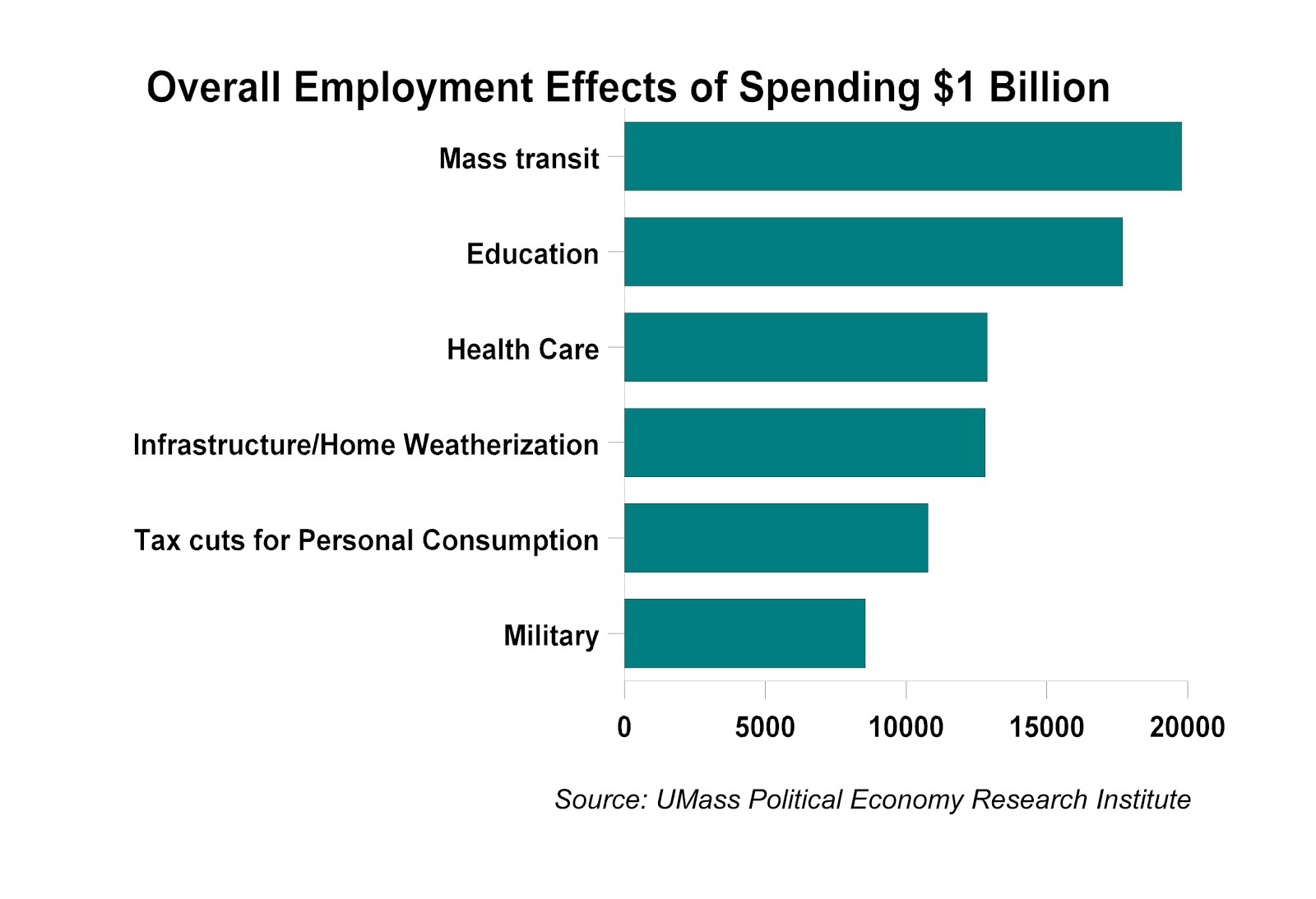
Woodstock's weapons contracting business is booming as the rest of the economy struggles. Should we change our priorities and support peaceful, green manufacturing instead of yet more weapons production? After all, we know that peaceful, green manufacturing creates more jobs (per $ invested) than military contracting.

"Ametek Rotron has completed its $2 million expansion in Woodstock, Ulster County. As part of this project, the company has committed to creating 15 new full-time jobs. Ametek Rotron specializes in high-performance fans for the defense and commercial aviation industries, working with companies like Lockheed Martin, Raytheon, and Northrop Grumman, and other high-end electronic users. ... The project will increase the manufacturing capability of the current facility by 30% and will allow the company to expand into advanced and additive manufacturing arena." [sic]
So once again our tax dollars (in this case, $604,000 of our state taxes) are going to support the expansion of the military-industrial complex rather than creating peaceful, green jobs.
Local politicians chimed in:
Assemblymember Kevin A. Cahill: "I am proud to have supported the funding that led to this much-anticipated project coming to fruition.”
Ulster County Executive Patrick K. Ryan: "We are proud to have Ametek Rotron as an important part of the Ulster County community."
Woodstock Supervisor Bill McKenna: “I am glad to see this addition to Ametek Rotron.”
It's a pity none of them has a word to say about Rotron's supplying parts for all major US weapons systems including nuclear missiles, and to prominent human rights violators such as Saudi Arabia and Israel. Nor about Rotron's long history of poisoning the wells, groundwater and soil of local homes with the toxic byproducts of its weapons components manufacturing.
Monday, June 29, 2020
Kathy Kelly on the need for a peace economy
From Counterpunch
" ... The time for manufacturing of weapons of war has passed as a viable industry for our nation, despite the way some of our political leadership clings to economies of the past. The global pandemic emphasizes for us all the interconnectivity of our global society and the folly, wastefulness, and moral failure of war in all forms. We must transform facilities like BIW [Bath Iron Works, Maine, maker of Aegis naval weapons systems] and Marinette [Fincantieri Marinette Marine shipyard, Wisconsin, maker of warships for the Pentagon and Saudi Arabia, visited by Trump on June 25] into hubs of manufacturing for solutions to the climate crisis, including public transportation, resources for the creation of renewable energy, and disaster-response vessels.
Building clean energy systems would generate up to 50% more jobs than making arms systems according to research by leading economists. The two biggest security threats to the United States are currently the climate crisis and COVID-19. The Pentagon’s contractors have long contributed to the climate crisis, and the time for conversion is now. ..."
Read Kathy Kelly's full article
" ... The time for manufacturing of weapons of war has passed as a viable industry for our nation, despite the way some of our political leadership clings to economies of the past. The global pandemic emphasizes for us all the interconnectivity of our global society and the folly, wastefulness, and moral failure of war in all forms. We must transform facilities like BIW [Bath Iron Works, Maine, maker of Aegis naval weapons systems] and Marinette [Fincantieri Marinette Marine shipyard, Wisconsin, maker of warships for the Pentagon and Saudi Arabia, visited by Trump on June 25] into hubs of manufacturing for solutions to the climate crisis, including public transportation, resources for the creation of renewable energy, and disaster-response vessels.
Building clean energy systems would generate up to 50% more jobs than making arms systems according to research by leading economists. The two biggest security threats to the United States are currently the climate crisis and COVID-19. The Pentagon’s contractors have long contributed to the climate crisis, and the time for conversion is now. ..."
Read Kathy Kelly's full article
Saturday, May 2, 2020
Woodstock's Biggest Business Is War

Saturday, April 18, 2020
Ventilators for national security?
Woodstock's own weapons contractor is still open as an "Essential Business" under the category of "defense and national security-related operations". What if, instead of making yet more components for weapons of war, it turned to making something much more crucial to our national security at this moment -- ventilators? Or at least, components for ventilators? As a company whose main products are sophisticated air-moving devices and electronic equipment, it might seem they were well placed to help with this urgent need.
Thursday, April 9, 2020
A portal into the next world
Arundhati Roy in the Financial Times:
"Historically, pandemics have forced humans to break with the past and imagine their world anew. This one is no different. It is a portal, a gateway between one world and the next.
We can choose to walk through it, dragging the carcasses of our prejudice and hatred, our avarice, our data banks and dead ideas, our dead rivers and smoky skies behind us. Or we can walk through lightly, with little luggage, ready to imagine another world. And ready to fight for it."
"Historically, pandemics have forced humans to break with the past and imagine their world anew. This one is no different. It is a portal, a gateway between one world and the next.
We can choose to walk through it, dragging the carcasses of our prejudice and hatred, our avarice, our data banks and dead ideas, our dead rivers and smoky skies behind us. Or we can walk through lightly, with little luggage, ready to imagine another world. And ready to fight for it."
Subscribe to:
Posts (Atom)