Published by CounterPunch
Hooked on the War Economy
Woodstock's Dirty Secret
By LAURIE KIRBY
Woodstock, New York
I’m proud of my small town’s worldwide association with peace. Many times during the 24 years that I’ve lived here, I’ve stood in peace vigils on the Village Green – and provided a bit of local color for visitors’ snapshots. Tourists and other assorted pilgrims are drawn to Woodstock by peace as well as by the festival that didn’t happen here.
So I was stunned as I sat the other day in our excellent public library, examining an archive which they store in a remote closet. The documents told me that for six decades Woodstock’s largest employer has been making crucial, custom components for nuclear missiles.
In the 60s and 70s, hippies graced the Village Green. A mile away, down a banal country lane, under the benign gaze of a statue of the Buddha, skilled workers assembled fans that were "critical to the success of nearly every U.S. military missile program," as the company’s promotional material boasted. And specially-designed Woodstock fans were busy in the skies over Vietnam in B-52 bombers, making possible the "Christmas Bombings" of 1972, which were the largest heavy bombing strikes launched by the U.S. since World War II.
Today, Made-In-Woodstock components fly F-15s and F-16s and Apache attack helicopters over Iraq, rumble through Afghanistan in Bradley tanks, fire warheads from rocket launchers, and prowl the oceans in nuclear submarines.
The Iraq War provided an upturn in Woodstock’s weapons contracts, as had the Vietnam and Korean Wars ("Woodstock Company Expands For War Work" was the headline of a local newspaper in the early 1950s).
The Cold War work of Woodstock’s Rotron Inc. fueled the growth of the town and provided employment for some of its artists. The company, which also makes civilian products alongside its core military work, has been a notable supporter of community efforts such as the rescue squad. Meanwhile (although this only became known in the 1980s), TCE and other highly toxic byproducts of weapons production were contaminating the wells of neighborhood homes, who to this day can’t drink their well water or grow their own vegetables.
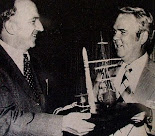
In 1973, the company even received a Special Award from Rockwell International, maker of the Minuteman nuclear missile. "Year after year," the award said, "the Rotron fan has performed on the Minuteman missile program without a single instance of failure."
Next to a model of a Minuteman, the award displayed a replica of one of Sir Francis Drake’s ships, likening Rotron’s contribution towards keeping the Soviets at bay to Drake’s turning back the Spanish Armada in 1588. (Today, the third generation of Minuteman ICBMs, now made by Boeing, are still a lethal nuclear threat – and still rely on Woodstock components.)
I stared at the nuclear missile and the sailing ship. What does it mean, I wondered, that for 60 years Woodstock, with its hippie-granola-peace reputation, has quietly had an economy anchored in nuclear terror and arms manufacturing?
It doesn’t mean that our tiny town is particularly evil. Rather the reverse: it means that Woodstock – like all towns – is both special and, at the same time, like everyone else.
All over the United States, in every congressional district, communities depend upon the war economy. Our own weapons-components plant, though it looms large in our local economy, is a small fish in the huge and murky pond of military contractors.
It means that, yes, even in Woodstock, too much of our hard work and creativity is expended producing products and services that go to war, that is, to desolation and waste.
And it means that, together with towns around the world, we have a responsibility to turn our local productivity in a positive direction.
Environmental, economic, and security crises are forcing us to rethink the economy. War makes all these crises worse. We can help to solve them by promoting peaceful, green manufacturing and services.
In a recession, people are naturally afraid of rocking the boat when jobs are at stake. But so many things we actually need are desperately underfunded. Fixing our infrastructure, for example, and educating our children. When money is put into these, it creates more jobs (per dollar invested) than war production.
Perhaps we shouldn’t, after all, follow the example of that plunderer and slaver Sir Francis Drake ... or any modern successors.
Laurie Kirby is a Professor of Mathematics at Baruch College of the City University of New York, and a Woodstock musician. He is a member of Woodstock Peace Economy.